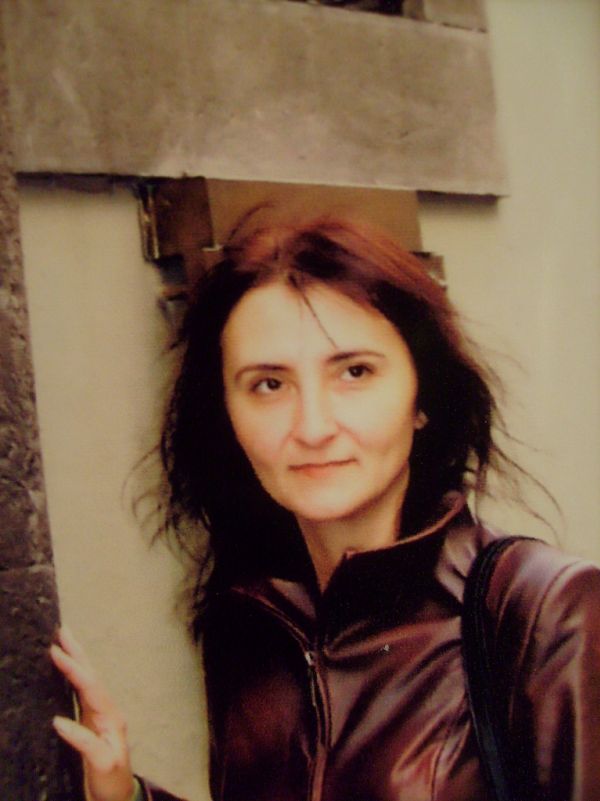
Bisera Dakova

bisera_dakova.jpeg
  • NAME: Bisera Dakova
  • INVERSION
  • INSTITUTION
    Institute for Literature, Bulgarian Akademy of Sciences, Institut für Slawistik – Universität Wien
  • COUNTRY
    Bulgaria
  • Бисера Дакова (1966). Доцент, доктор по нова и съвременна българска литература в Института за литература – БАН. От есента на 2016 е гост-преподавател по български език и литература в Университет Виена, Австрия. В периода януари–юни 2003: изследователска стипендия „Ернст Мах“ 269към Философския факултет на Университет Виена, с научен ръководител проф. д-р Алфред Пфабиган. В периода 2006–2011 преподава български език и литература в Института за славистика на същия университет и в университета „Фридрих Шилер“ в Йена, Германия. Автор е на редица научни статии в специализирани периодични издания и сборници, както и на монографиите: „Яворов. Археология на автора“ (Стигмати, 2002), „Век и краевековие. Позитивизъм и декаданс в българската литература през ХІХ век; аспекти на ориентализма и културната идентичност“ (Карина-М, 2007), „Der unanthologische Trajanov. Die getilgte Dekadenz. Über die Verwandlungen der poetischen Sprache“ [Неантологичният Траянов. Изличеното декадентство. За преображенията на поетическия език] (Dr. Kovač, 2009). Преводач на голямата австрийска писателка Фридерике Майрьокер: „само ЖЕСТОКО седя“ (Ерго, 2019).


12/04/2025

Bisera Dakova

IN THE WHIRlPOOL OF THE GAME OF QUOTES (OBSERVATIONS ON P. К. YAVOROV ATTEMPT AT FICTION, ENTITLED “FROM THE OBSERVATORY TO THE STATION”)

  • ABSTRACT

    Yavorov’s experiment to be not himself, to enter the zone of fiction, is a performative act: what we see on the road, on the move, crossing Sofia, coincides with the entry into and exit from the narrative (from the prose). In this compendium text, Yavorov, adopting a role uncharacteristic of him, continually refers to recognizable or hidden gestures of famous writers, demonstrating an ostentatious familiarity in handling them. There is an empathy with Luben-Caravelov’s “physiological sketch”, reminiscences from Aleko’s feuilletons, ironically snide remarks to P. P. Slaveykov, mockery at the poetry of Trifon Kunev. The narrative’s travelogue, the selected Sofia topoi are frankly reminiscent of Vazov’s cycle of stories “Kardashev on the Hunt”. Yavorov’s text abounds with quotations – from the mocking-parody of Nietzsche’s Zarathustra and the Gospel to the profane-volgarized belitrization of his own lyrical motifs, i.e. to the seemingly muted self-reference to already published.


TEODOR TRAYANOV IN THE MIDST OF BULGARIAN SYMBOLISM

05/29/2024

Bisera Dakova

INTRODUCTORY WORDS

  • ABSTRACT

    На 20 юни 2022 г. в Института за славистика, Университет Виена, се състоя Кръгла маса „Теодор Траянов всред българския символизъм / Teodor Trajanov inmitten des bulgarischen Symbolismus“. В този малък форум, проведен на границата между пандемията и „нормалното време“, се включиха видни изследователи на модернизма в българската литература: Михаил Неделчев, Иван Младенов, Елка Димитрова, Пламен Антов, Борис Минков, забележителният познавач на живота и творчеството на Теодор Траянов от периода Млада Виена Младен Влашки, както и изследователи с по-различен профил и научни интереси като Мариета Иванова-Гиргинова, Елка Трайкова, Александра Антонова, Мария Огойска, Вера Радева.


05/29/2024

Bisera Dakova

TRAYANOV’S TITLES – CONTEXTS OF SELF-ERASURE AND SELF-CREATION

  • ABSTRACT

    Looking into the work of T. Trayanov it turns out that most of his emblematic titles appeared much later, only in the 1920s. If we exclude the vivid ornamental titles of the early twentieth century (“The Drop of Desire”, “Melancholy of the Petrified”), as well as the few surviving titles from then (“Sunflower”, “New Day”), the poet’s later titles were not spontaneously placed as the texts appeared, but were formulaic quintessences, used over a long period of time and applied with a particular aesthetic tendency in mind. Thus, Trayanov’s titles mark the changes in his poetics: there are either a small number of persistent titles, reimagined from a radically new context; or the proliferation of spring titles, a product of the ideological format of optimistic upbeat Bulgarian symbolism imposed in the early 1920s. These include titles associated with pagan-ritual origins (“Pyre”, “White Altar”, “Altar Flowers”), also titles produced by self-stylization in the spirit of German Romanticism such as “Blue Flower”, “Violet”, “Daffodils”, as well as all titles that emerged as a consequence of contextual links, correlations and affirmations in the magazine Hyperion.